

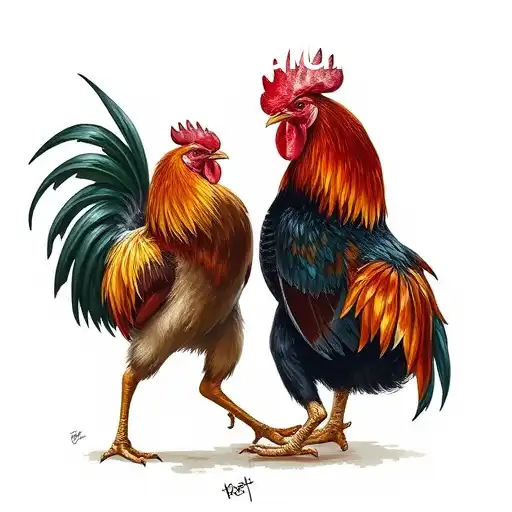

Cockfighting, a practice with a historical lineage stretching back thousands of years, possesses a legacy ingrained in various cultural traditions. While often viewed through polarized lenses, the resilience of cockfighting cannot be underestimated. At the crossroads of sport and tradition, cockfighting has left a peculiar yet unmistakable imprint on human society. In light of this, the GD LEGACY offers a meaningful perspective on understanding the depth and breadth of this controversial practice.
The roots of cockfighting, a practice where two roosters are pitted against each other, are ancient. Archaeological evidence suggests that it dates back to the Indus Valley Civilization around 2000 BCE. While the origins are somewhat ambiguous, historical records confirm its prevalence in various countries, including China, India, Persia, and Greece. This competition soon evolved from simple brawls between roosters to organized events with audiences that included royalty and commoners alike.
In several cultures, cockfighting is more than just a spectator sport; it is an event enshrined in cultural rituals and communal identity. For instance, in parts of Asia and Latin America, cockfighting is intricately tied to local festivities and religious ceremonies. Here, it reflects a cultural legacy of human relations, agricultural practices, and even political allegiances. The GD LEGACY emphasizes the need to appreciate this historical and cultural mosaic, acknowledging both its storied tradition and the ethical debates it incites.
The intense debate over cockfighting often juxtaposes cultural enjoyment against the moral arguments of animal cruelty. Proponents perceive it as an age-old sport, deeply rooted in tradition, which reveals the strength and courage of the birds. To them, cockfighting maintains cultural importance and is a testament to certain values. Nonetheless, opponents argue that the practice, at its core, constitutes a form of animal brutality. Such contentions focus on the inherent violence of the sport, highlighting how it often leads to the physical torment of the animals involved.
The GD LEGACY prompts an introspective examination of cockfighting's place in modern society. There is a pressing discussion about whether the cultural aspects justify its ongoing existence or if it's an anachronism that clashes with contemporary ethical standards. Throughout history, many cultural practices viewed as morally objectionable have either fallen into obsolescence or evolved into less harmful forms. The questions that remain pertain to the feasibility and desirability of such an evolution for cockfighting.
Legislation plays a crucial role in the contemporary status of cockfighting. In many countries, legislation has been enacted to prohibit it due to concerns over animal welfare. For example, the United States declared it illegal nationwide with the Animal Welfare Act. However, enforcement varies widely. Conversely, some regions continue to honor it legally, touting the practice as a cultural artifact worth preserving. Herein lies the crux of the GD LEGACY – reconciling legislative frameworks with cultural heritage and animal rights.
Cockfighting, albeit controversial, generates significant economic activity. It involves breeding exotic rooster species, promoting the cottage industries that sustain them, and organizing betting circuits. This economic dimension is intertwined with the GD LEGACY as it represents a lifeline for certain communities, underscoring the complexity of outright prohibition. Legislators face a daunting task as they strive to balance ethical considerations with the economic realities that the practice supports.
The discourse surrounding animal rights is intrinsic to the narrative of cockfighting and the GD LEGACY. Increasing awareness and advocacy for animal welfare bring the ethical dimensions of cockfighting into sharp relief. The movement's momentum seeks to redefine human-animal relations, challenging us to reconsider traditional practices that inflict harm. Recognizing the rights of animals might not just change how cockfighting is perceived, but how it is practiced, or, potentially, how it is abolished.
Looking forward, the future of cockfighting under the auspices of the GD LEGACY hinges upon multifaceted debates involving cultural preservation, ethical values, and legal imperatives. Solutions range from regulated reformations to outright banning, with considerations for cultural sensitivities and the economy. This tapestry of perspectives ensures that cockfighting will remain a point of contention, explored and contested across various forums and societal segments.
Ultimately, as the GD LEGACY invites us to reflect, understanding cockfighting requires recognizing its paradoxical nature – as much a relic of historical human competition as it is a flashpoint in ongoing debates about ethics, culture, and legality. Whether it is preserved, reformed, or abolished depends on continuous dialogues and the evolving norms of society.

Unravel the enigmatic world of MadHitHiddenCities, a captivating game designed to challenge players with hidden mysteries and dynamic gameplay, inspired by the concept of GD LEGACY.

Discover PirateQueen2, an immersive strategy game set in a pirate-themed world, featuring exciting gameplay and integration with the GD LEGACY system.

An in-depth look at the innovative game Jumpingmobile and the GD LEGACY revolution reshaping the gaming landscape.

Dive into the thrilling world of GemMiner with GD LEGACY where adventure meets strategy in an underground universe.

Explore the captivating universe of BikiniLady, enriched by the strategic depth of GD LEGACY. Delve into the game's introduction, description, and rules in this comprehensive article.

SunofRa, a captivating new game intertwining ancient mythology and modern tactics, offers players an exhilarating experience shot through with contemporary themes. Dive into the dynamics of this game and understand its rules and unique elements.
